
Why businesses lose inquiries they have already paid, worked, or waited to generate.
A new inquiry rarely appears by accident.
You may have paid for an ad, spent years building a reputation, published useful content, earned a referral, or waited for someone to finally search for exactly what you offer.
Then the phone rings.
A form comes in.
Someone sends a message asking about availability, pricing, or the next step.
At that moment, the hardest part has already happened: the person has raised their hand.
The lead was already yours to lose.
Most lead problems begin after the lead arrives
When bookings slow down, businesses often assume they need more traffic.
More ads. More content. More outreach. More money at the top of the funnel.
Sometimes that is true. But frequently, the real problem is further down.
The business is already generating interest. It simply is not converting enough of it.
A call goes unanswered because the receptionist is helping someone else.
A website inquiry sits in an inbox until the next morning.
A prospect asks a question, receives a partial answer, and never hears from anyone again.
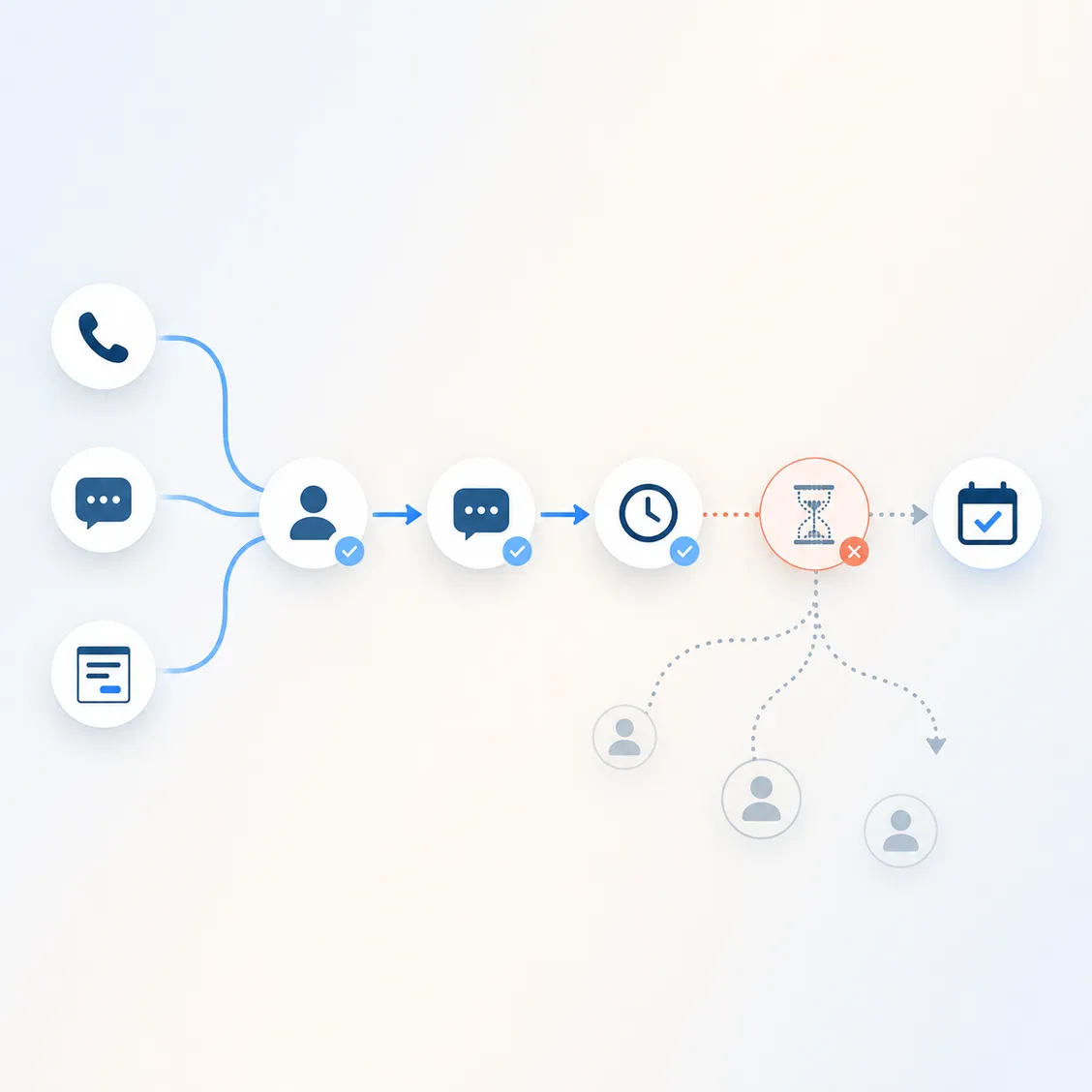
Someone says they need to check their calendar, think about it, or speak with their partner. The conversation is marked as “follow up later,” then quietly disappears.
None of these leads were cold.
They had already taken action. The business just failed to keep the momentum moving.
Speed matters, but speed alone is not enough
Fast response is important because intent has a short shelf life.
Someone searching for a dentist, lawyer, clinic, contractor, or consultant is rarely contacting only one business. They are comparing response times, availability, clarity, and how easy each company makes the next step.
But being first does not guarantee the booking.
A quick response that says, “Someone will get back to you,” is not the same as moving the conversation forward.
A useful response should do something:
- Answer the immediate question
- Understand what the person needs
- Confirm whether they are a good fit
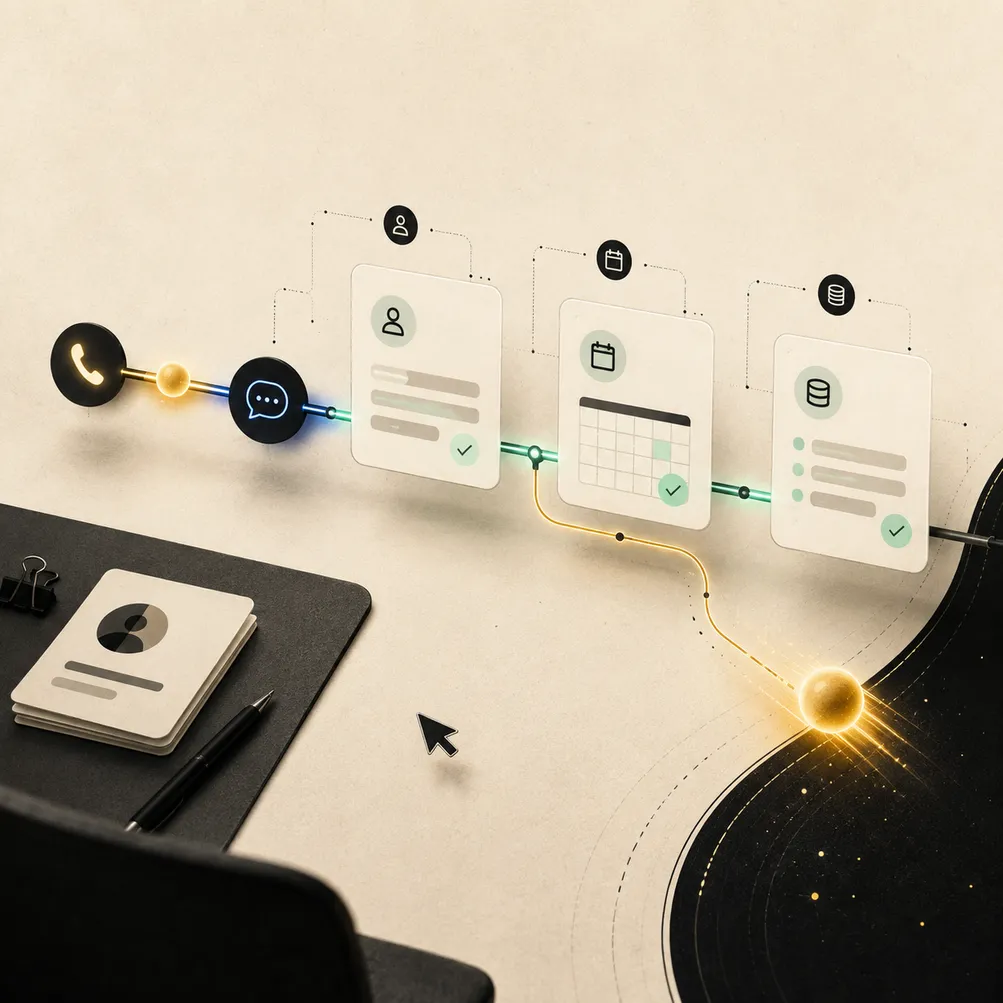
- Offer the right appointment or next step
- Capture the information the team will need
- Make it clear what happens next
Speed opens the door. A working process gets the person through it.
The biggest leak is often weak follow-up
Many businesses respond once and consider the job done.
They call the prospect. No answer.
They send an email. No reply.
They provide a quote. Silence.
The lead is then treated as uninterested.
But silence does not always mean no.
People get busy. They forget. They miss calls. They intend to respond later. They compare options. They need another reminder at the right moment.
A strong follow-up system does not harass people. It keeps the conversation alive until there is a clear outcome.
That outcome may be:
- The prospect books
- They ask to be contacted later
- They say they are not interested
- They are not a good fit
- A human needs to step in
What should not happen is that the lead disappears because nobody remembered to try again.
Handoffs create invisible gaps
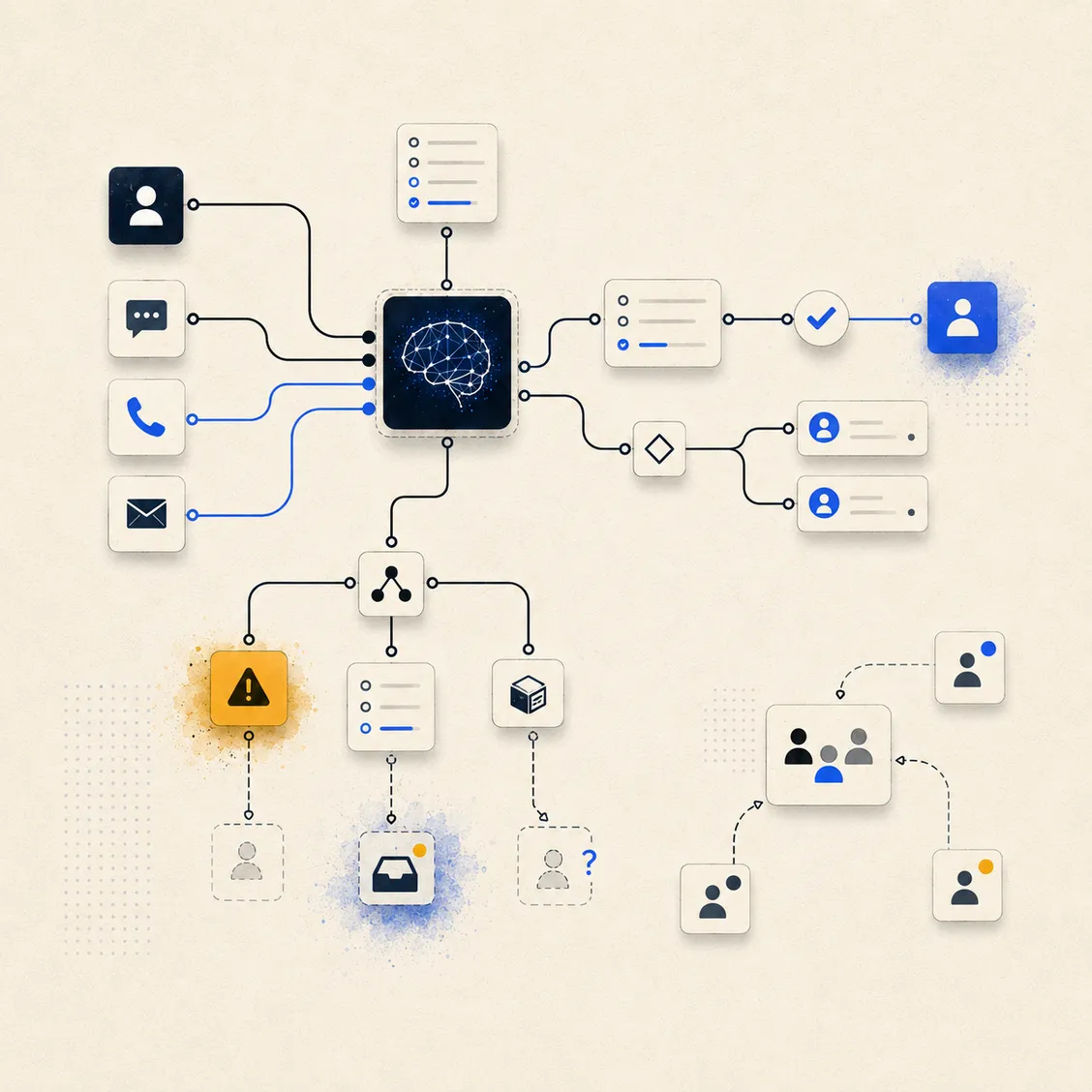
Even when the first response is good, leads can still vanish between people and tools.
Reception takes the call but forgets to notify sales.
The form enters the CRM, but no owner is assigned.
A consultation is booked, but the notes are incomplete.
The prospect asks a question that only a manager can answer, but the handoff has no urgency.
The follow-up task exists, but it is buried among dozens of other reminders.
These are not always dramatic failures. That is why they are dangerous.
A business can look busy, organized, and well-equipped while losing leads through small gaps every day.
The issue is not necessarily the phone, the CRM, the calendar, or the team.
It is what happens between them.
More leads can make the problem worse
Sending more traffic into a broken follow-up process does not solve the problem. It increases the number of opportunities being wasted.
Before spending more to generate demand, a business should understand what currently happens after someone makes contact.
A simple review should answer:
- How quickly does every channel receive a response?
- What happens outside business hours?
- Who owns each new inquiry?
- What information is collected before booking?
- How many follow-up attempts are made?
- What happens when someone misses an appointment?
- Does the CRM reflect what actually happened?
- When does a human need to step in?
The goal is not to automate every interaction.
The goal is to remove the moments where good opportunities depend on memory, availability, or luck.
Fix the first costly leak
The best place to begin is usually not a complete technology rebuild.
Start with the bottleneck that is easiest to see and most expensive to ignore.
That may be missed calls.
It may be slow website responses.
It may be leads receiving one message and nothing after that.
It may be appointments getting booked without proper qualification.
Or it may be inquiries being captured but lost during the internal handoff.
Fix one leak first. Measure whether response, booking, or follow-up improves. Then connect the next part of the journey.
Because in many businesses, the next customer does not need to be generated.
They have already called.
They have already messaged.
They have already asked for help.
The lead was already yours.
The system simply needed to hold onto it.
The takeaway
Before asking how to generate more leads, ask what happens to the ones already arriving.
The fastest growth opportunity may not be more traffic.
It may be fewer missed calls, faster answers, better follow-up, and a clearer path from first contact to booked next step.