
Why one unanswered message should trigger the next step – not the end of the conversation.
A prospect calls, fills out a form, or sends a message.
Your team replies.
Then nothing.
No answer. No booking. No explanation.
For many businesses, that is where the conversation ends.
The lead is marked as unresponsive, moved down the priority list, or left sitting in the CRM until someone eventually forgets why it was there.
But silence is not the same as rejection.
It is simply the absence of a response.
And those are not the same thing.
People go quiet for ordinary reasons
A lead can be interested and still fail to respond.
They may have opened your message while walking into a meeting.
They may have seen your missed call and planned to return it later.
They may need to check their schedule, speak with a partner, compare options, or wait until payday.
They may have asked three businesses the same question and become overwhelmed by the replies.
Or your message may have arrived at the wrong moment and been buried under everything that came after it.
None of that proves they changed their mind.
It only proves that your message did not produce an immediate action.
Treating every unanswered message as a dead lead means confusing timing with intent.
The first reply is not the follow-up process
Many businesses believe they follow up because they respond once.
A new inquiry arrives. Someone sends an email or makes a call. If the prospect does not answer, the team considers the task complete.
Technically, the lead was contacted.
Commercially, almost nothing happened.
A real follow-up process does not ask:
Did we send a message?
It asks:
Did the conversation reach a clear outcome?
That outcome may be:
- A meeting or appointment was booked
- The prospect asked to reconnect later
- They chose another provider
- They said they were no longer interested
- They were not a good fit
- A human needed to take over
Until one of those things happens, the lead is still unresolved.
And unresolved leads should not depend on somebody remembering to check again.
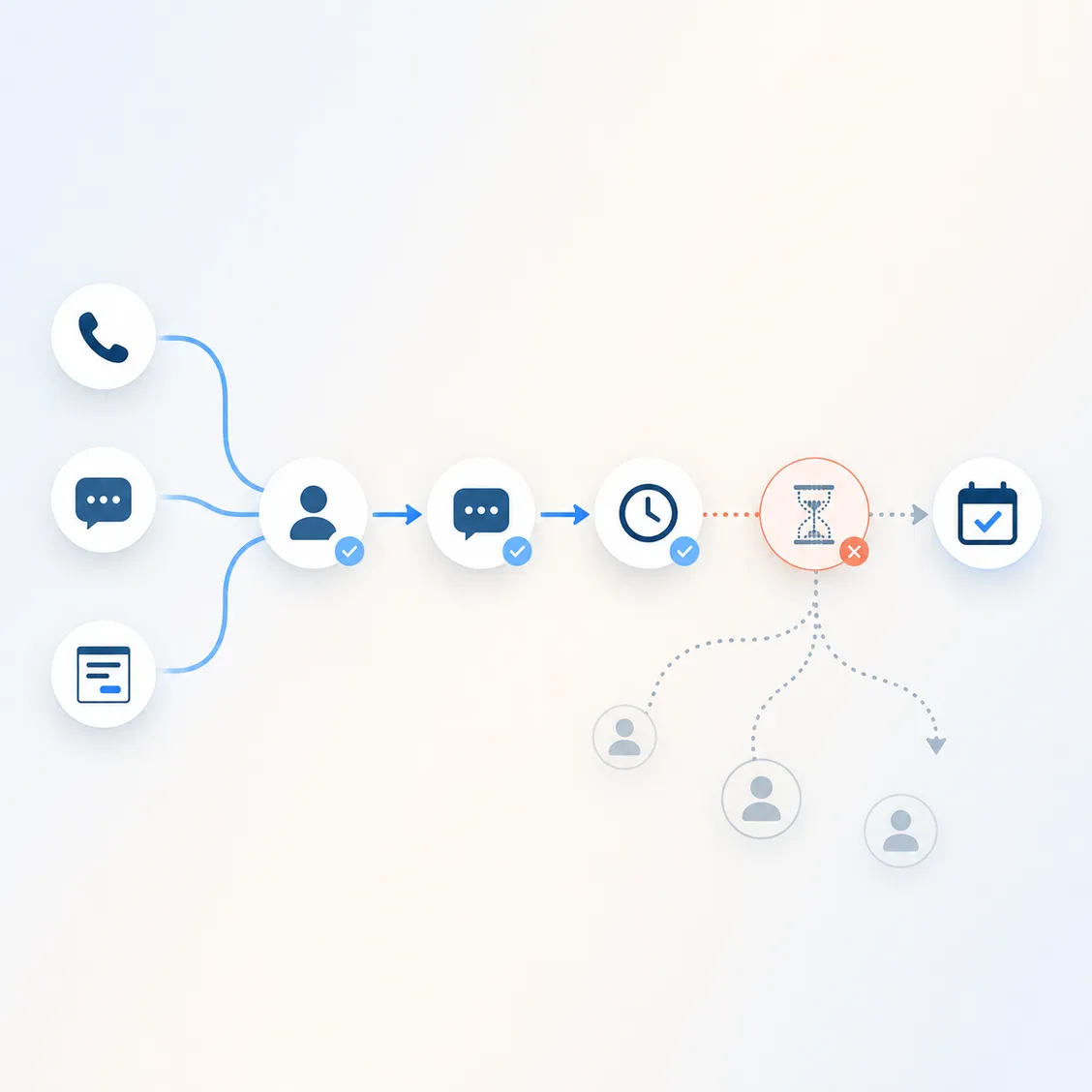
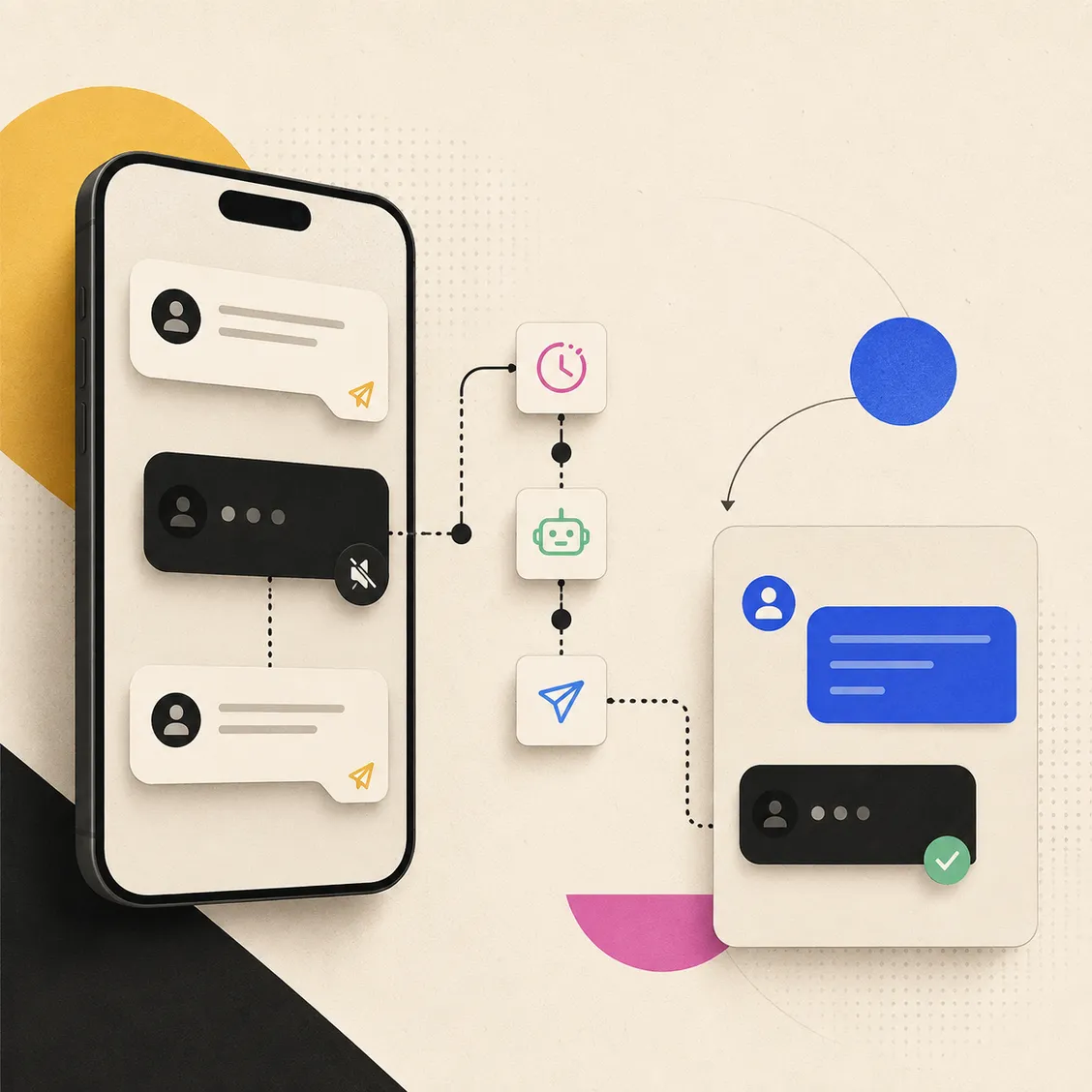
Silence should trigger the next step
When a prospect does not respond, the system should know what happens next.
Not endlessly. Not aggressively. Not with the same message copied five times.
The next step should be deliberate.
It might be:
- A short reminder a few hours later
- A follow-up the next morning
- A different channel, such as SMS after email
- A useful answer to a likely objection
- A direct link to book
- A message that makes it easy to say “not now”
- A final close-the-loop message
The point is not to keep messaging until the person gives in.
The point is to make sure interest is not lost simply because the first attempt arrived at a bad time.
Good follow-up lowers effort
Weak follow-up often sounds like this:
Just checking in.
Or:
Following up on my previous message.
These messages remind the prospect that the sender wants a reply, but they do not make replying any easier.
A better follow-up gives the person a simple next action.
For example:
Still looking to book this week? I can send over the next two available times.
Or:
Happy to help with this. Is your main concern availability, pricing, or whether the service is the right fit?
Or:
No rush if the timing is not right. Should I follow up next month instead?
Each message reduces the amount of thinking required.
The prospect does not need to restart the conversation, find the original email, or work out what to say.
They only need to choose the next step.
That is what useful follow-up does.
Repetition is not persistence
Poor follow-up repeats the same message.
Good follow-up changes the reason to respond.
The first message may confirm the inquiry.
The second may answer a common question.
The third may offer booking options.
The fourth may address the most likely hesitation.
The final message may close the loop and leave the door open.
Each touch should add something.
Otherwise, the sequence becomes noise.
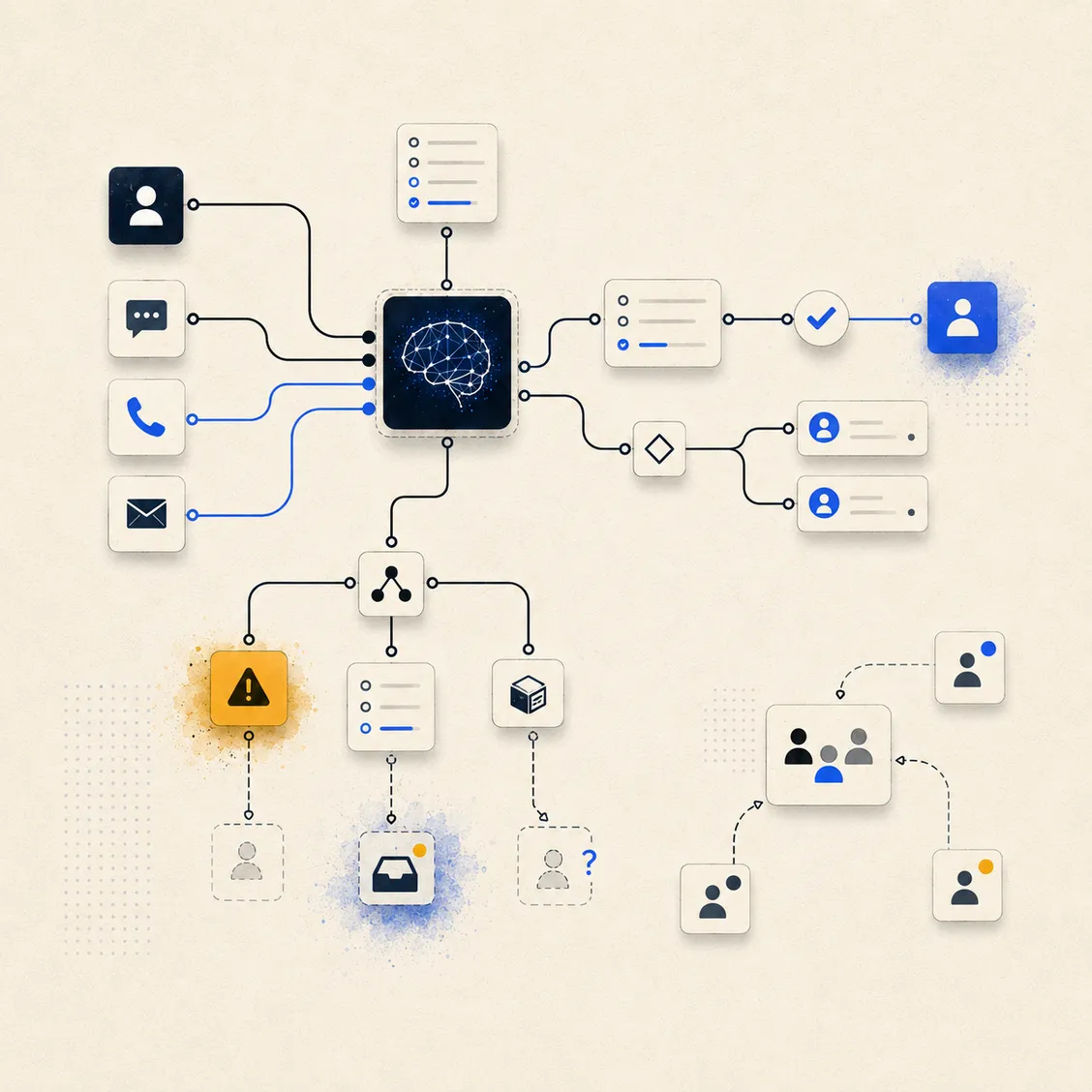
This is where automation is valuable—but only when it is designed around the real conversation.
Automation should not create more messages for the sake of activity.
It should decide:
- When to follow up
- Which channel to use
- What context to include
- When to stop
- When a person should take over
The goal is not maximum contact.
The goal is a clear outcome with the least unnecessary friction.
Follow-up should remember the conversation
One of the fastest ways to lose trust is to make the prospect repeat themselves.
They already explained what they need.
They already selected a service.
They may already have spoken with someone on the team.
A good follow-up system carries that context forward.
It knows:
- Where the inquiry came from
- What the prospect asked
- Which service they were interested in
- Whether they received an answer
- Whether they were offered a time
- Who owns the lead
- What happened during previous attempts
That means the next message can feel connected to the conversation instead of starting from zero.
Compare:
Just following up to see if you are interested.
With:
You asked about an appointment on Thursday afternoon. We still have 3:30 available—would you like me to hold it?
The second message feels helpful because it remembers what happened.
The human handoff still matters
Not every silence should be handled by another automated message.
Sometimes the lead has asked a complicated question.
Sometimes the opportunity is unusually valuable.
Sometimes the prospect sounds uncertain, frustrated, or sensitive.
Sometimes a real conversation is more appropriate than another reminder.
The system should know when the situation has moved beyond routine follow-up.
That may mean alerting a manager, assigning a call task, or pausing the sequence until someone reviews the conversation.
The best automation does not remove human judgment.
It protects human attention for the moments where judgment matters most.
Stop rules matter as much as follow-up rules
A follow-up process needs a clear ending.
Messages should stop when:
- The prospect books
- They reply
- They ask not to be contacted
- They are disqualified
- A human takes ownership
- The sequence reaches its agreed limit
Without stop rules, automation becomes careless.
A person books and still receives reminders.
They say no and continue getting messages.
A staff member takes over while the system keeps sending unrelated replies.
That does more than annoy the prospect. It exposes that the business is not actually listening.
The system should follow up consistently, but it should also know when the conversation has changed.
The cost of giving up too early
Generating a lead takes work.
The business may have paid for the click.
A team member may have created the content.
A referral partner may have made the introduction.
The prospect may have spent time researching, reading reviews, and deciding to reach out.
Then one unanswered message causes the entire opportunity to be abandoned.
That is an expensive place to stop.
The prospect did not reject the offer.
The business simply failed to continue the conversation.
And when that happens across dozens or hundreds of inquiries, the loss is easy to misdiagnose.
The company may blame:
- Poor lead quality
- Weak advertising
- Low demand
- The wrong audience
- A difficult market
But the real issue may be much simpler.
Too many conversations are ending without an answer.
Build follow-up around outcomes
A useful follow-up workflow should answer five questions:
- What happens after the first unanswered message?
- How long should the system wait?
- What should the next message add?
- When should a human step in?
- What clear event ends the sequence?
Once those rules exist, follow-up stops being an informal responsibility and becomes part of the operating system.
The business no longer relies on somebody remembering which leads went quiet yesterday.
The system remembers.
The team steps in when needed.
And each inquiry keeps moving until there is a real answer.
Because silence may become a no.
But it should not be treated as one before the prospect has actually said it.
The takeaway
One unanswered message is not a finished conversation.
It is a signal that the next step needs to happen.
The businesses that recover more opportunities are not necessarily the ones sending the most messages. They are the ones following up with context, timing, restraint, and a clear path forward.